Bitcoin Casino Canada 2026: A Canadian Player's Guide to Faster Deposits, Lower Fees and Provably Fair Games
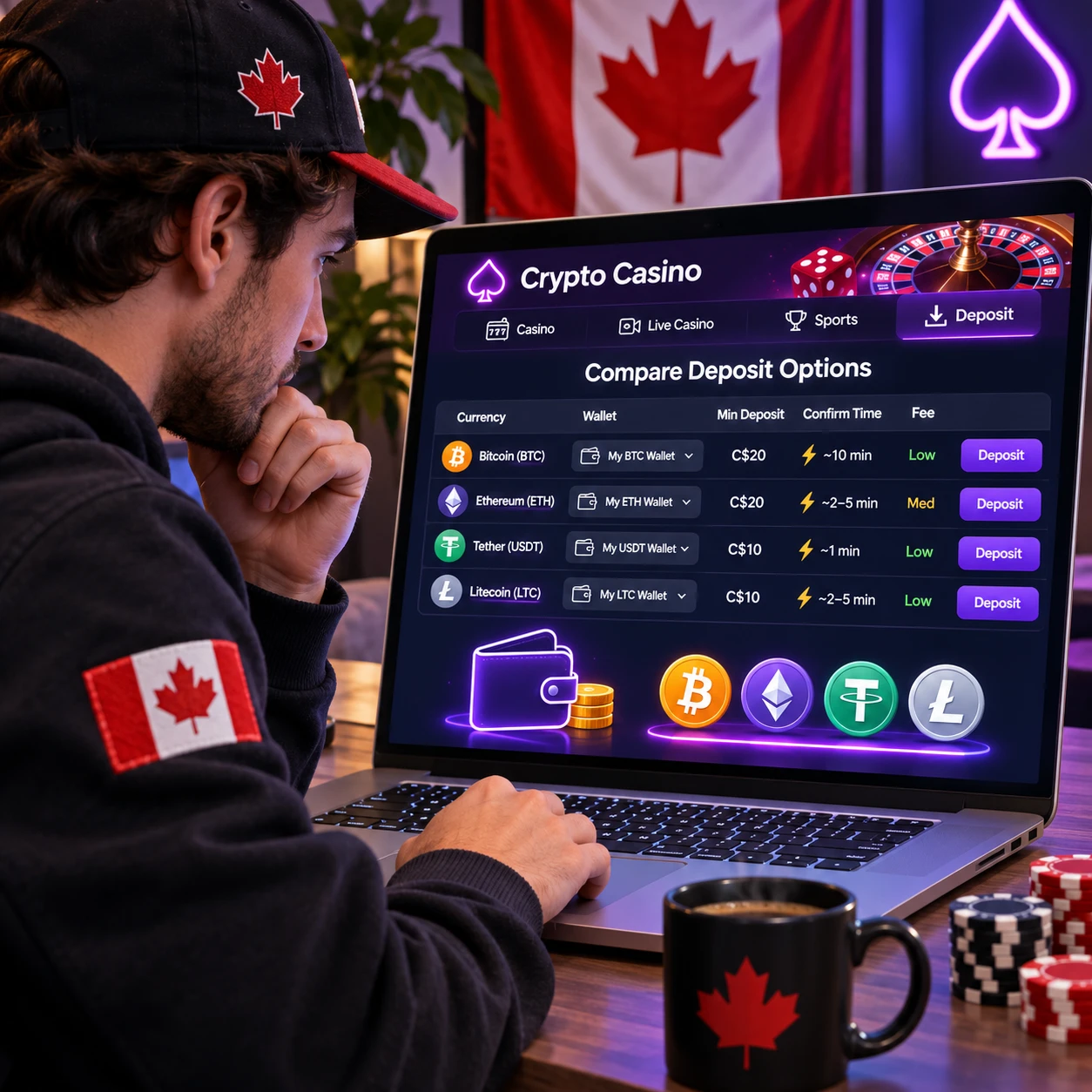
If you've been gambling online in Canada for a while, you've probably noticed the shift. Deposits that used to sit in limbo for a day or two — waiting on a bank transfer, a card authorization, an Interac e-Transfer that just never quite showed up — now clear in about the time it takes to make coffee. That didn't happen by accident. A growing number of players moved their bankroll onto the blockchain and stopped asking a payment processor for permission.
Three claims deserve a closer look here: speed, cost, and verifiability. Crypto-native casinos keep promising all three, and all three happen to be the easiest things to fudge in marketing copy. What I want to hand you by the end is a practical checklist you can point at any platform. Not a pile of slogans. No affiliate cheerleading — just what the mechanics actually deliver in 2026.
What a Bitcoin Casino Actually Is in 2026
Strip the branding away and the definition is boringly simple: a gambling site that treats BTC — and usually ETH, LTC, and USDT — as a first-class currency. Your balance is denominated in crypto. It is not a CAD wallet with a conversion layer bolted on somewhere behind the scenes.
That distinction sounds technical. It isn't. It's structural. Whether your balance is genuinely held in crypto decides your settlement time, your fee exposure, and whether anyone — you included — can audit the games you're playing. Get that one wrong and the other two promises collapse on their own.
Crypto-first vs. crypto-friendly casinos
A crypto-first operator builds its deposit pipeline around blockchain confirmations. Withdrawal limits are set in coin, not CAD. Verification timing is designed around a wallet flow instead of a piece of plastic. A crypto-friendly legacy site is a different animal. It has a 'Pay with Bitcoin' button wired to a third-party processor, you send BTC, they convert it, and your balance lands in fiat. The speed advantage evaporates somewhere in the middle of that handoff, and the fees come back as a spread.
Why this matters more in Canada than elsewhere
Canadian players hit friction that players in most other markets didn't. Gambling sits under provincial regulation, so the rules change depending on whether you're in Ontario, Quebec, Alberta, or BC. Interac dominates everyday banking. And a lot of card issuers simply decline gambling merchants outright. When your two most convenient rails are either restricted or blocked, on-chain payments stop looking like a novelty and start looking like the practical option.
Faster Deposits — From Wallet to Bankroll in Minutes
The mechanics are worth ten minutes of your attention, because they explain every delay you'll ever hit. Your wallet broadcasts a transaction, the network pulls it into a block, the casino's system waits for a set number of confirmations, then your balance gets credited. The variable that trips most people up is the confirmation threshold. That's an operator decision, not a network one. Some credit at zero confirmations. Some at one. Some wait for three.
Deposit timelines compared
- Interac e-Transfer: Usually minutes to a few hours, occasionally next business day. Low minimums, but gambling merchants are frequently blocked.
- Credit card: Instant when it works — but Canadian issuers often decline gambling transactions outright, and cash-advance fees can apply.
- BTC on-chain: Ten minutes to an hour depending on congestion and the confirmation count the casino requires.
- Lightning: Seconds, at fractions of a cent, provided the casino supports it. The clear winner for anyone who wants to be playing in under five minutes.
- Stablecoins (USDT/USDC): Fast on low-cost chains, and handy if you'd rather not absorb BTC volatility mid-session.
Getting your withdrawal out just as fast
Here's where the complaints pile up. Deposits are easy. Payouts involve a human review. Your first withdrawal will always be slower than your tenth, because that's when KYC actually happens — ID, proof of address, sometimes a liveness check. Do it before you request the payout, not after. Requesting a withdrawal mid-verification is the most common self-inflicted delay I see, and it can freeze your funds for days while a queue works itself out.
Lower Fees — Where the Savings Come From, and Where They Don't
'Zero fees' is a marketing phrase, not a cost structure. Real costs land in three buckets: network fees paid to miners, the operator's spread on any currency conversion, and the quiet charges — withdrawal minimums, inactivity fees, and minimum-wager rules on bonuses that effectively tax your balance.
Reading a fee schedule without getting fooled
Keep 'zero deposit fee' and 'zero cost' in separate boxes. A casino can charge nothing on the deposit while applying an unfavourable BTC-to-CAD rate on the way in, then again on the way out. If the market rate is 1 BTC to $X and the house credits you at $X minus three percent, you paid three percent. It just isn't printed on the fee page. So compare the rate they quote against a public spot price from the same day. A fair spread on a major pair is tight — well under one percent. Anything wider needs a justification you probably won't get.
Provably Fair Games — What the Cryptography Actually Proves
Plain language version. Before a round, the casino generates a server seed and publishes its hash. You supply a client seed, or get assigned one. A nonce counts your bets. All three get hashed together to produce the outcome. After the round the server seed is revealed — and since you already had its hash, you can confirm it wasn't swapped after the fact. Change the seed and the hash changes. You'd catch it instantly.
Now the narrow scope, because this part gets oversold. Provable fairness verifies the result wasn't altered. It says nothing about how generous the house edge is. A provably fair game can still be a badly priced game.
Verifying a round yourself in three steps
- Copy the server seed hash (published before the round), your client seed, and the nonce.
- After the round, take the revealed server seed and run all three through a published verifier or HMAC-SHA256 tool.
- Compare your output against the result the casino recorded. They should match character for character.
What provably fair does not cover
Slots and live-dealer tables from third-party studios sit entirely outside this model. There you're trusting the provider's RNG certification, not a hash you can check yourself. And provable fairness tells you nothing about licensing, dispute resolution, or responsible-play safeguards. Separate questions, separate answers.
Choosing a Bitcoin Casino in Canada — A 2026 Checklist
This is the point where speed, cost, and fairness stop being abstractions and get applied to an actual shortlist. Compare platforms side by side before you sign up with the first one that ranks well. Licensing jurisdiction, deposit minimums, withdrawal limits, game library, and whether support can explain seed verification all matter more than a homepage banner. A decent starting point is this bitcoin casino canada comparison resource, which lays out the options without making you open ten tabs.
Red flags worth walking away from
- No verifiable licensing or oversight body anywhere on the site.
- Withdrawal terms buried outside the FAQ, or written in language that changes meaning between pages.
- Bonus wagering requirements above 40x — you will almost certainly not clear them.
- Support that can't answer a basic question about seed verification, or deflects it entirely.
The Canadian Legal Picture and Playing Responsibly
Gambling in Canada is regulated provincially, and the framework differs depending on where you live. Crypto is treated as a commodity for tax purposes rather than currency, which means disposals — losses and gains included — can carry reporting obligations. Declaring winnings is your job, not the operator's. Keep simple records of deposits, withdrawals, and wallet movements. Takes a minute. Saves a bad afternoon.
On the responsible-play side: set deposit limits before your first session, use session timers, and remember that a provably fair game is still a game with a house edge baked into its math. Verifiability protects you from a rigged result. It doesn't protect you from a bad decision at 2 a.m.
Final Thoughts
Fast deposits and low fees are operational wins — real, measurable, and worth having. But provable fairness is the one feature that changes what you can verify as a player, and that's a different category of improvement altogether. My advice is the same every time: start small. One modest deposit, one manual round verification with the seeds in front of you, one withdrawal from start to finish. If all three behave the way the fee schedule and the fairness page promised, you've learned more about that platform than any review could tell you.